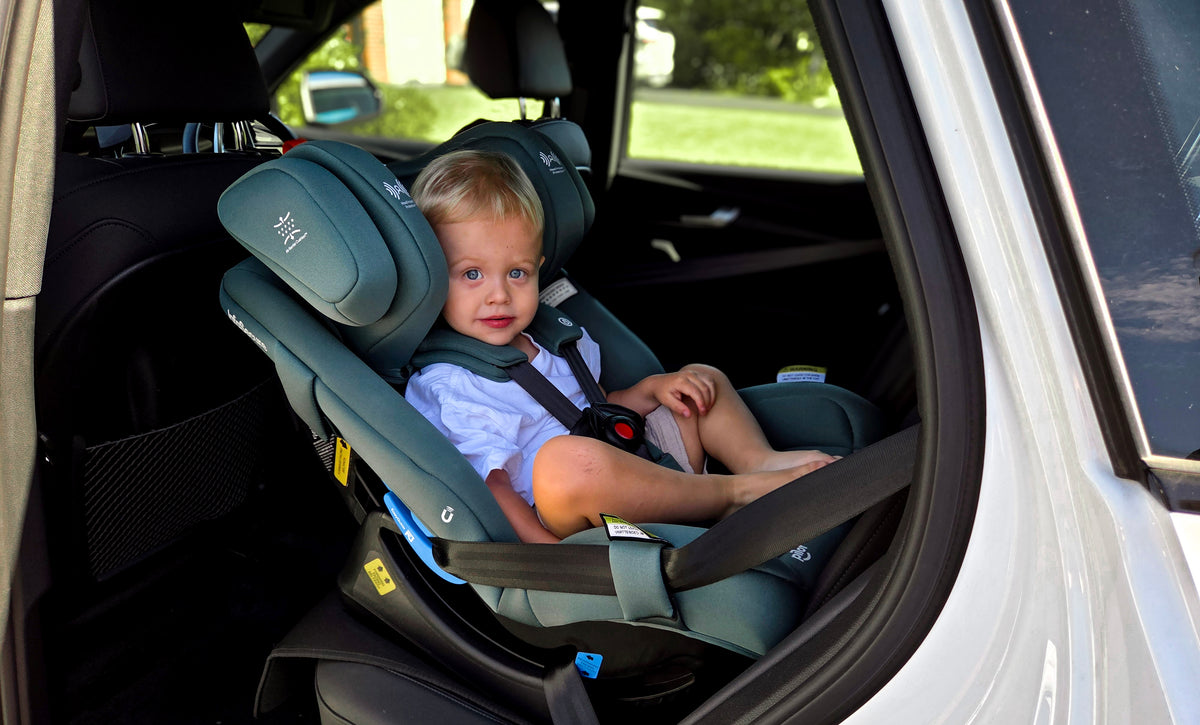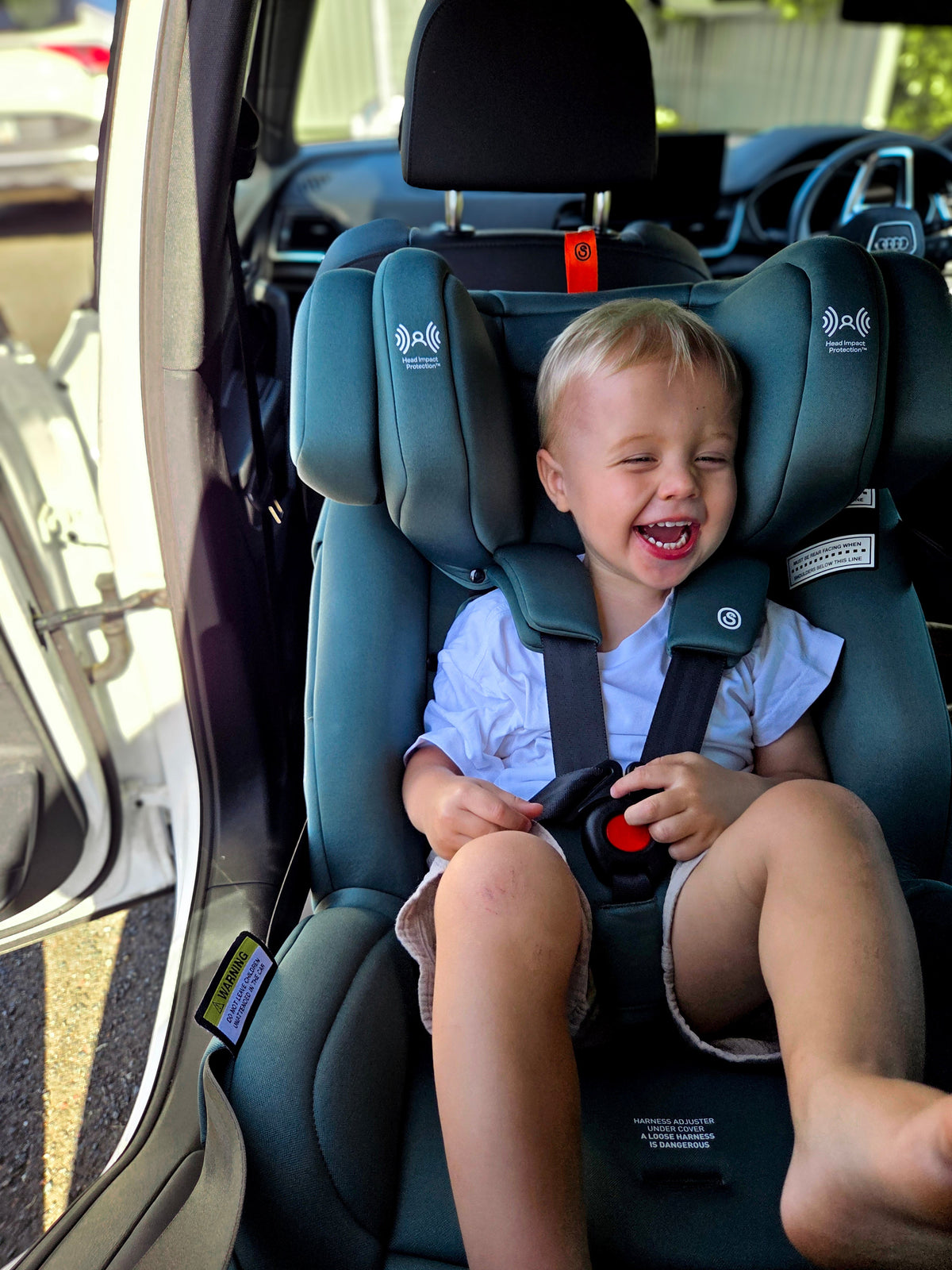
Turning your baby to face forward feels like a milestone. They can see you, see out the window, and car trips often get a little easier. But when it comes to car seats, the safest choice isn't always the earliest one.
What Australian law says
The Australian Road Rules set the minimum requirements for children travelling in cars:
- Under 6 months: must travel in an approved rear-facing child restraint.
- 6 months to under 4 years: must travel in an approved rear-facing or forward-facing child restraint with an inbuilt harness.
- 4 years to under 7 years: must travel in an approved forward-facing restraint with an inbuilt harness, or a booster seat used with a correctly adjusted and fastened seatbelt or child safety harness.
These are the minimums. Penalties and some details vary by state, so it's worth checking your local transport authority's website too.
Why rear-facing for longer is safer
A young child's head is large and heavy compared with their body, and their neck and spine are still developing. In a frontal crash, a rear-facing seat supports the head, neck and back together and spreads the force across the seat shell. That's why child safety experts recommend keeping your child rear-facing for as long as they fit within the seat's rear-facing limits, rather than switching as soon as the law allows.
It's about size, not birthdays
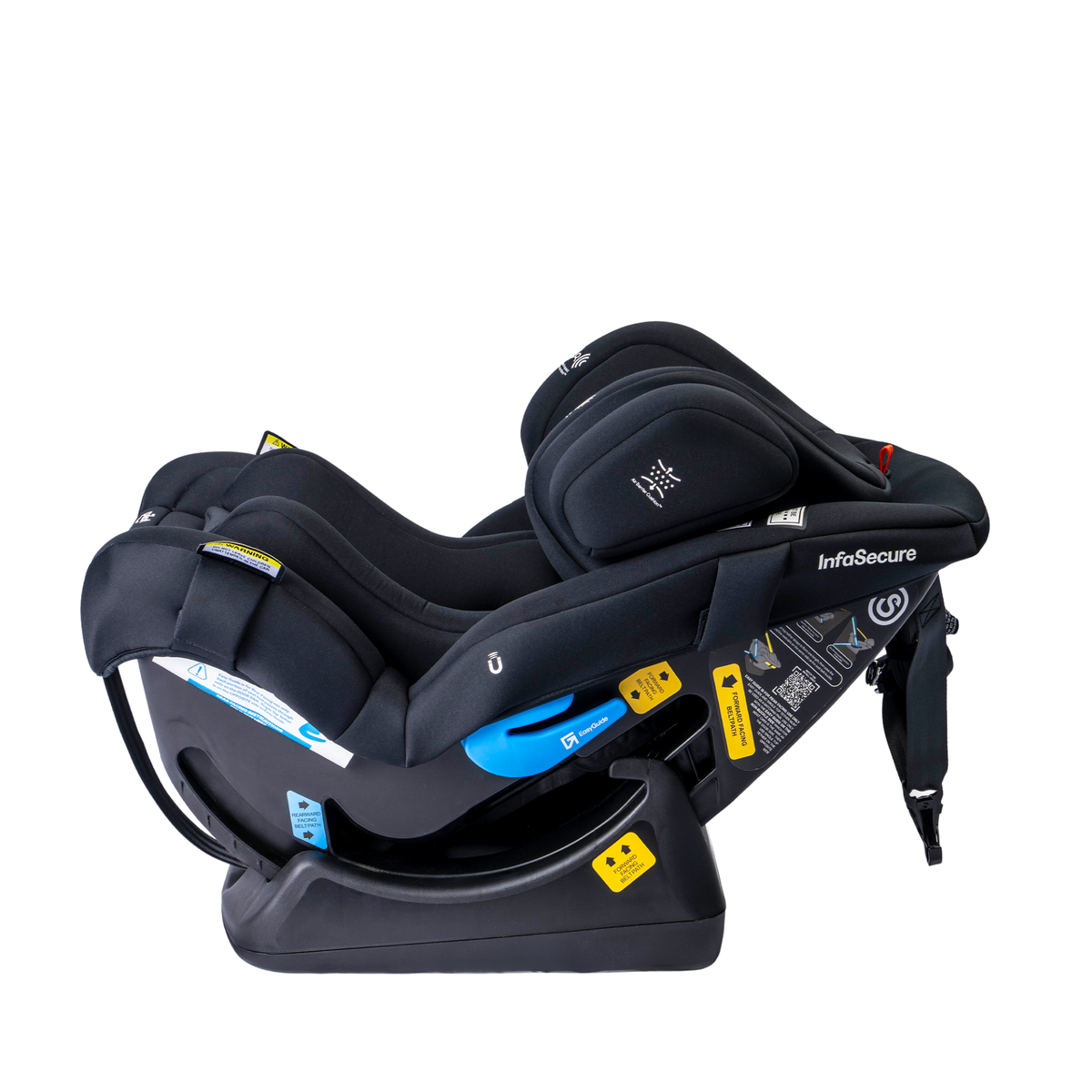
Age rules tell you the minimum. Your car seat's shoulder height markers tell you when your child has actually outgrown each mode. Check the markers on your seat and the instruction manual before making any change.
Seats that let you stay rear-facing longer
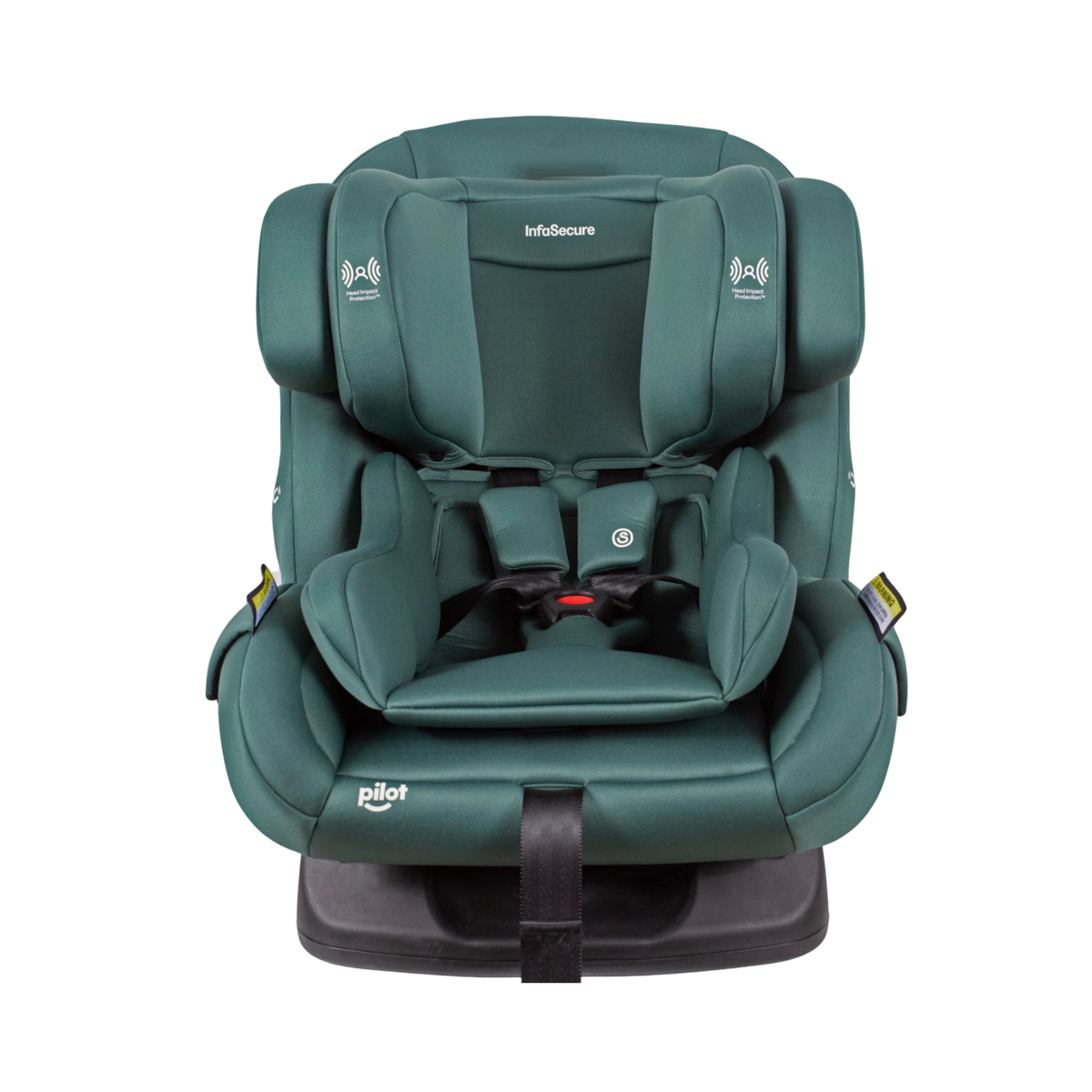
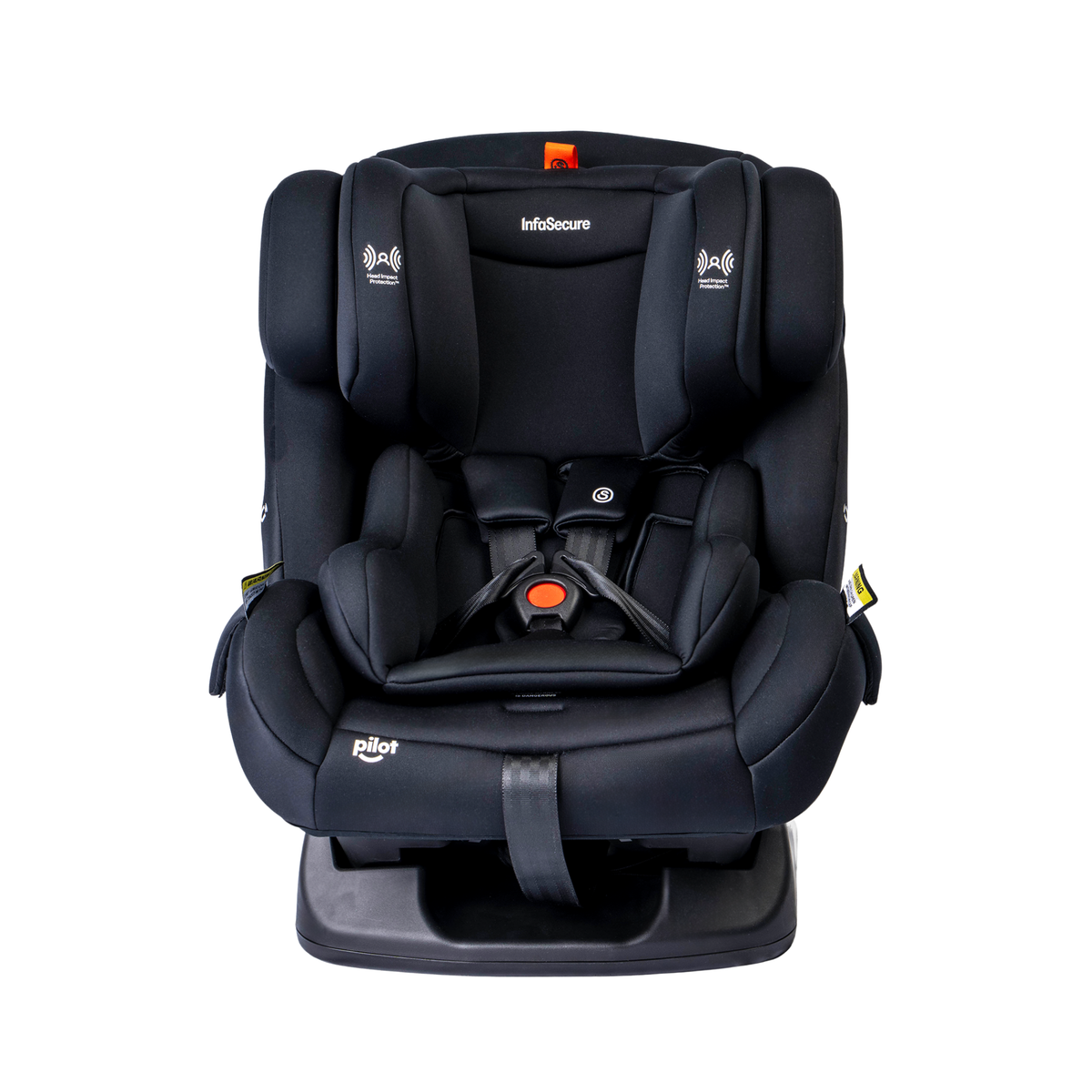
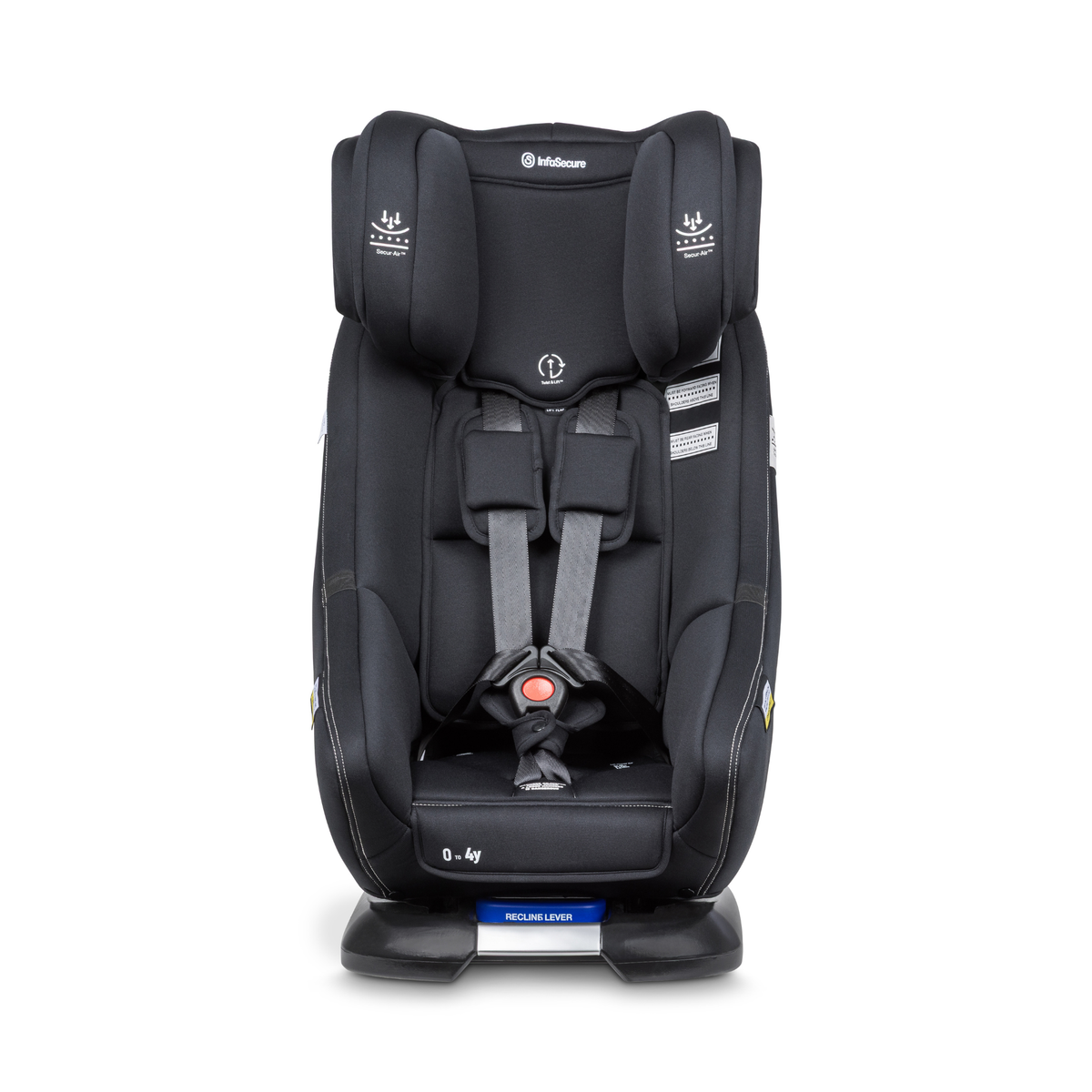
If you want to keep your little one rear-facing well past six months, choose a convertible seat designed for extended rear-facing. The InfaSecure Pilot is built for birth to four years, with extended rear-facing and forward-facing modes in one seat. You can also explore the Attain Air and Quattro Onyx.
Need a hand?
If you're unsure whether your seat is fitted correctly, a professional restraint fitter can check it for you. Every InfaSecure seat also comes with a detailed instruction manual, which you can find on each product page.