






D3O is a specialist material technology designed to help manage impact energy. It is used in applications ranging from protective sporting equipment to motorcycle apparel and other products where impact protection matters.
InfaSecure has incorporated D3O into the Pilot convertible car seat, bringing this advanced material technology into a restraint designed for everyday family use.
How does D3O work?
D3O is engineered to remain flexible under normal conditions. When exposed to a sudden force, its molecules lock together temporarily, helping the material absorb and dissipate impact energy before returning to its flexible state.
However, the effectiveness of any impact-protection material depends on more than the material alone. Its formulation, thickness, position and integration into the overall product design all contribute to how it performs.
This is why D3O should not be considered a standalone safety feature or a replacement for choosing, installing and using a child restraint correctly.
Why does material placement matter?
A child restraint works as a complete system. The shell, harness, padding, head support, top tether and installation method must all work together to help protect the child.
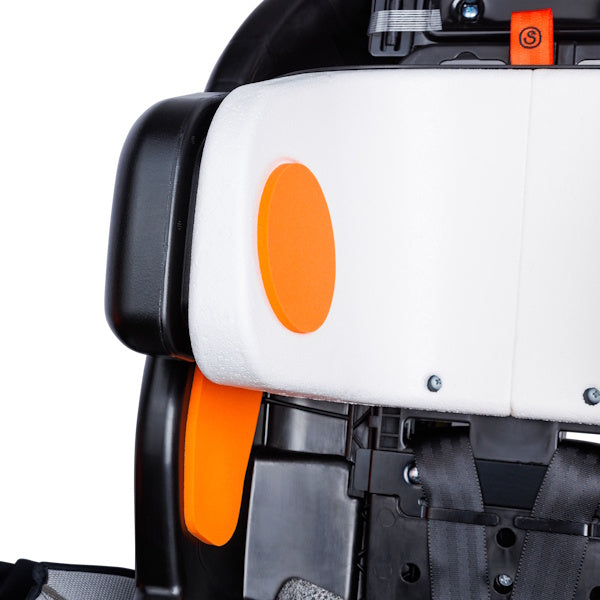
In Pilot, D3O has been strategically incorporated within the seat’s protective design. Its recognisable orange appearance also offers a visible reminder that some of the most important technology in a car seat sits beneath the fabric.
When comparing D3O car seat protection, parents should consider how the material has been integrated into the restraint rather than focusing only on whether a branded component is present.
Impact protection must work alongside correct use
Even the most advanced material technology cannot compensate for an incorrectly installed or adjusted car seat.
The restraint must be appropriate for the child and installed in accordance with the manufacturer’s instructions. The harness should sit flat and firm, the top tether must be correctly attached and the seat should be regularly adjusted as the child grows.
Pilot has been designed to bring its D3O protection together with practical features that support installation, everyday adjustment and a compact fit. These elements are intended to work as one complete restraint rather than as separate features.
What should you consider when comparing car seats?
Looking beyond the visible fabric can help you understand what has gone into a restraint’s protective design. Consider:
- How the seat supports a secure and correct installation
- Whether the harness is easy to adjust as the child grows
- How protective materials are positioned within the restraint
- Whether the seat fits the child, vehicle and family’s everyday needs
- How easily the instructions and features can be understood and used correctly
D3O is one part of Pilot’s broader design, giving families access to an advanced impact-protection material within a practical birth-to-four convertible car seat.
Frequently asked questions
Is D3O soft or hard?
D3O is generally flexible during normal use. When subjected to a sudden force, the material responds by temporarily stiffening to help absorb and dissipate impact energy.
Where is D3O used in Pilot?
D3O is incorporated within key areas of Pilot’s protective design. Refer to the current product information or ask an authorised InfaSecure retailer or fitter for a demonstration of its placement within the seat.
Does D3O replace other car-seat safety features?
No. D3O works as part of the complete restraint design. It does not replace the shell, harness, top tether or the need for correct installation and adjustment.
Does D3O mean a car seat is safer?
The presence of D3O alone should not be used to judge the overall safety of a car seat. The material must be considered alongside the restraint’s complete design, correct installation and suitability for the child and vehicle.



