








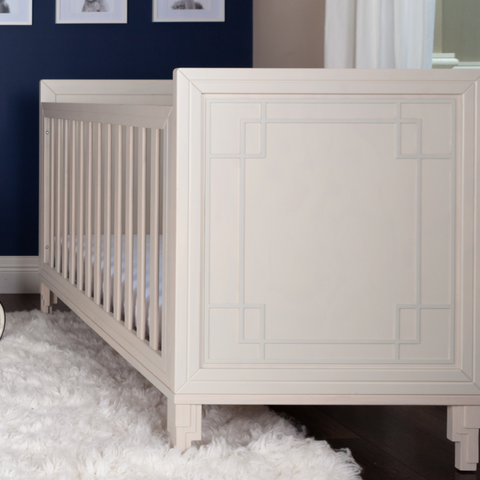




A convertible cot is designed to adapt as a child grows, allowing families to use the same piece of furniture beyond the baby stage.
Depending on the model, a convertible cot may change from an enclosed baby cot into a toddler bed, daybed or another furniture configuration. Some include the required conversion pieces, while others need a compatible toddler rail or conversion kit to be purchased separately.
Understanding these differences before buying can help families choose a cot that suits their nursery now and their needs in the years ahead.
What Is a Convertible Cot?
A convertible cot begins as an enclosed sleeping space for a baby.
When the child is ready to move out of the cot configuration, one side may be removed or replaced with a toddler rail to create a more accessible bed.
The available modes depend on the individual design. A convertible cot may offer:
- An infant cot mode
- A lower toddler cot mode
- A toddler-bed mode
- A daybed or sofa-style mode
- A larger bed configuration using additional conversion pieces
Not every cot includes every option. Always check the product specifications and instruction manual before purchasing or converting it.
What Is the Difference Between Infant and Toddler Cot Modes?
Many cots offer more than one mattress-base height.
The higher base position is generally intended to make it easier for parents to reach a young baby who is not yet mobile.
As the baby grows and becomes more active, the mattress base must be lowered according to the cot instructions. The lower position helps maintain the required distance between the mattress and the top of the cot sides.
The mattress-base height should be changed before a child’s increasing mobility creates a climbing or falling risk. Follow the product manual rather than relying on age alone.
Changing the mattress height is not the same as converting the cot into a toddler bed. In the lower cot position, all cot sides remain in place.
When Is a Child Ready for a Toddler Bed?
There is no single age that is right for every child.
The transition should be guided by the child’s development and the instructions for the specific cot.
It may be time to consider converting the cot when:
- The child is attempting to climb out
- The child has reached the cot manufacturer’s stated limit
- The cot no longer provides an appropriate sleeping space
- The child can safely get into and out of a toddler bed
- The family is ready to childproof the entire room for independent access
Do not convert the cot simply because the child has reached a particular birthday.
Some children are ready earlier than others. The product instructions and the child’s individual development should guide the decision.
How Does a Cot Convert Into a Toddler Bed?
The process varies between models.
A typical conversion may involve:
- Removing the cot mattress.
- Removing one of the cot sides.
- Installing the compatible toddler rail or conversion panel.
- Checking that the mattress base is in the required position.
- Tightening all bolts and connections.
- Replacing the correctly sized mattress.
- Completing a full stability and safety check.
Only use the parts and hardware specified for the cot. Do not improvise with a generic rail, modify the cot or leave out required components.
Keep the original instructions, hardware and conversion pieces together so they can be located when the child is ready.
Is a Toddler Rail Necessary?
A toddler rail creates a partial barrier along the open side of the bed. It can provide additional reassurance while still allowing the child to get in and out independently.
Whether one is required depends on the cot’s approved toddler-bed configuration.
Some convertible cots include a toddler rail with the original purchase. Others require a compatible rail to be bought separately.
For example:
- The GroTime Mia Cot converts into a toddler bed with its toddler rail included.
- The GroTime Corby Cot includes a toddler rail for its toddler-bed mode.
- The GroTime Kingsley Cot can convert into a toddler bed using a compatible toddler rail sold separately.
Always confirm what is included with the particular cot and colour before purchasing.
Can You Use the Same Mattress?
Many convertible cots are designed to continue using their compatible cot mattress in toddler-bed mode.
However, families should never assume that any mattress of a similar size will be suitable.
The mattress should:
- Match the dimensions specified for the cot
- Sit firmly and flat
- Fit without unsafe gaps
- Remain in suitable condition
- Be used in the position shown in the instructions
If the cot later converts into a larger bed size, a different mattress may be required.
Check the cot specifications and manual before purchasing a mattress or conversion kit.
Why Choose a Convertible Cot?
A convertible cot can offer several practical advantages.
Longer Product Use
Conversion allows the cot to remain useful after the enclosed cot stage has ended.
A More Familiar Transition
Moving into a new sleep arrangement can be a significant change. Keeping the same mattress and familiar piece of furniture may make the transition feel less dramatic for some children.
Consistent Nursery Design
A convertible cot can remain part of the room as it changes from a baby nursery into a toddler space.
Less Immediate Furniture Replacement
Families may not need to purchase a separate toddler bed as soon as the child leaves the cot configuration.
The actual period of use and available modes will depend on the product instructions and the child’s size.
What Should You Check Before Buying?
Before choosing a convertible cot, ask:
- Which modes does it offer?
- Is the toddler rail included?
- Are additional conversion pieces required?
- Are the conversion parts currently available?
- Which mattress is compatible?
- Does the same mattress work in toddler-bed mode?
- What tools are required for conversion?
- What are the limits for each mode?
- Where can replacement instructions or hardware be obtained?
- Will the cot’s dimensions suit the room in every configuration?
Looking beyond the initial cot mode can help avoid unexpected purchases or compatibility problems later.
Preparing the Room for Toddler-Bed Mode
A cot is an enclosed sleeping environment. A toddler bed gives the child greater access to the entire room.
Before converting the cot, reassess the room from the child’s height and perspective.
Check that:
- Chests, tallboys and other furniture are appropriately secured
- Blind and curtain cords are inaccessible
- Electrical cords and power points are managed
- Windows cannot be accessed or opened unsafely
- Small objects and choking hazards are removed
- Stairs and nearby areas are appropriately restricted
- Medications and personal-care products are locked away
- Heavy objects cannot be pulled down
- The area around the bed is clear
- Smoke alarms are installed and maintained
The room itself becomes part of the child’s sleeping environment once they can leave the bed independently.
Safe Sleep Still Matters
Converting the cot does not mean safe-sleep considerations should be forgotten.
Follow current safe-sleep guidance and the instructions for the child’s age and sleeping environment.
For babies using the cot configuration:
- Use a firm, flat and correctly fitting mattress
- Place the baby on their back to sleep
- Keep the baby’s head and face uncovered
- Keep the sleep space clear of pillows, cot bumpers, soft toys and loose bedding
- Use the cot exactly as instructed
Do not add aftermarket products or modify the cot to change its appearance or function.
Common Conversion Mistakes
Avoid:
- Converting the cot without reading the instructions
- Using a rail made for a different model
- Leaving out bolts, brackets or support pieces
- Using improvised replacement hardware
- Assuming every mattress will fit
- Converting before the child can safely use the open bed
- Continuing to use the enclosed cot after the child can climb out
- Forgetting to childproof the wider room
- Discarding conversion parts after assembling the cot
- Buying a second-hand cot without all required parts and instructions
If any part is missing or damaged, contact the manufacturer before converting or using the cot.
Choosing a GroTime Convertible Cot
GroTime offers cot designs created to support different nursery styles, spaces and stages.
Some models, including Mia and Corby, include toddler-bed conversion with a toddler rail. Kingsley offers toddler-bed conversion using a compatible rail available separately.
Other GroTime cots may provide adjustable infant and toddler mattress-base positions without converting into an open toddler bed.
Check the individual product page and instruction manual to understand exactly which modes, accessories and mattress sizes apply.
Growing Beyond the Nursery
A convertible cot can help create a more gradual move from the baby stage into toddlerhood.
The most important consideration is not how many modes a cot offers, but whether each mode is appropriate for the child, assembled correctly and used exactly as instructed.
By planning for the later stages before purchasing, families can choose nursery furniture that supports both their immediate needs and the changes ahead.
For questions about a GroTime cot, mattress or conversion kit, contact InfaGroup Customer Care with the product name and model details for specific guidance.
Go Back


